Enzyme Manufacturers
Global enzyme sourcing
Food Processing and Bakery enzymes

Food Processing and Bakery

Catalase for Dairy in Madurai, India

Catalase is an enzyme that decomposes residual hydrogen peroxide into water and oxygen. Evaluate its role in your process, build a business case and discuss a grade-specific trial with Enzyme Manufacturers.

Madurai, IndiaApplication-led grade selection
Product: CatalaseApplication: DairyMarket: India
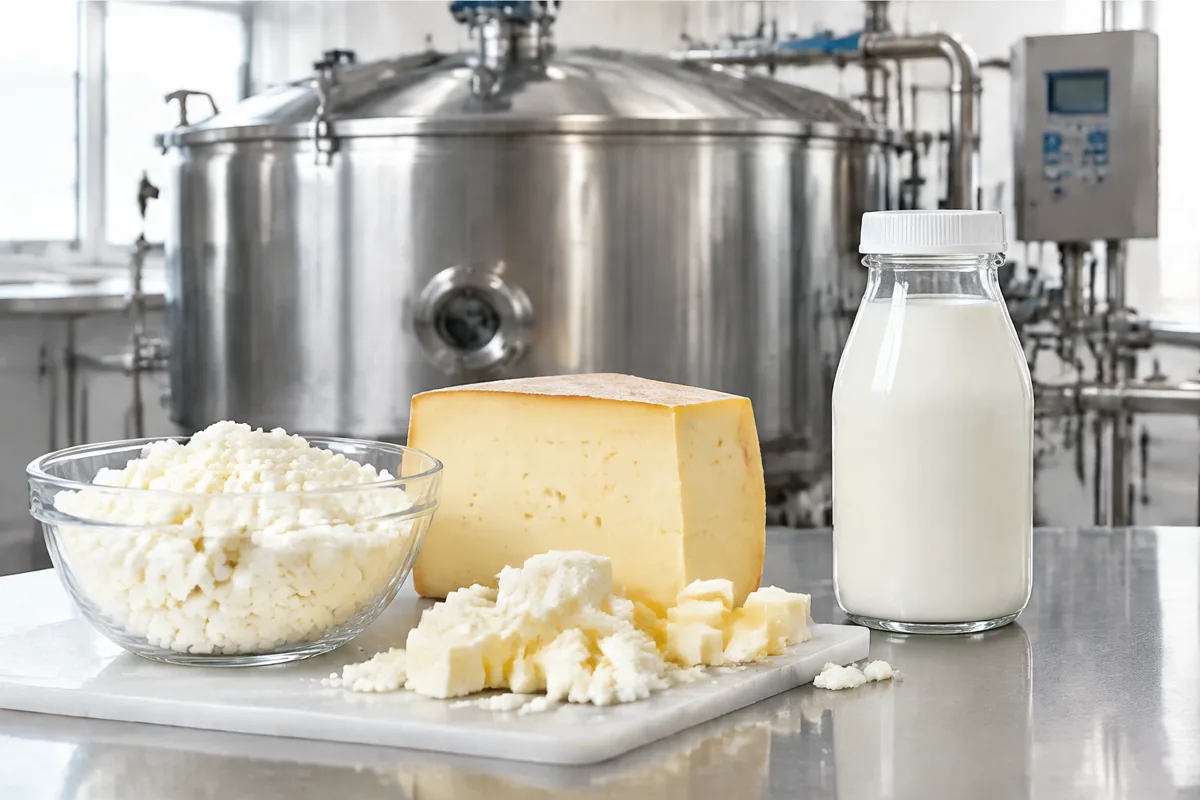
Dairy enzyme application: milk, cheese and curd samples beside dairy processing equipment
Dairy enzyme selection and process evaluation. Confirm product grade and suitability with the responding manufacturer.

In short

Is this relevant to your operation?

In dairy, texture, flavour development and residual peroxide affect dairy products. For food processing and bakery operations in Madurai, India, that is usually where the cost, yield or quality pressure sits.

  • The enzyme approach: Catalase is an enzyme that decomposes residual hydrogen peroxide into water and oxygen. Its value in dairy depends on the right grade, addition point, pH, temperature and contact time for your raw material, which the selected manufacturer reviews with you before any plant use.
  • The business question: Can a measured process improvement outweigh enzyme, implementation and qualification costs while maintaining quality?
  • Your next step: Establish a baseline, model your own numbers below, then request a controlled trial for your Madurai operation.

A technical evaluation, not a guaranteed outcome. Grade, dose, availability and delivery terms need confirmation.

Process challenge

A focused approach to dairy

In dairy, texture, flavour development and residual peroxide affect dairy products. For food processing and bakery operations in Madurai, India, that is usually where the cost, yield or quality pressure sits.

The role of Catalase

Catalase is an enzyme that decomposes residual hydrogen peroxide into water and oxygen. Its value in dairy depends on the right grade, addition point, pH, temperature and contact time for your raw material, which the selected manufacturer reviews with you before any plant use.

Where the value may come from

Target a measurable improvement on the step where texture. Results depend on incoming raw material and operating conditions, so value is confirmed through a controlled trial, not assumed.

The relevant starting material is your dairy raw material; record its composition, source and variability. Assess biochemical performance and the full operating workflow together: a laboratory result alone is not enough to justify a plant-wide change.

Decision highlights

Measure value without compromising quality

  • The process outcome Catalase targets in dairy
  • Product quality against your customer specifications
  • Cost per unit of saleable output, including enzyme cost

For topline impact, additional saleable output must meet customer specifications and have demand. A faster cycle or better laboratory conversion does not automatically mean more revenue.

Operational excellence

Make the improvement repeatable

  • Standardise inputs: Record raw-material variability, baseline quality and batch size so comparisons remain meaningful.
  • Control the process window: Confirm pH, temperature, residence time, addition point and compatibility for the selected grade.
  • Protect the operator: Review the safety datasheet, storage conditions, dosing method and site-specific handling controls.
  • Track consistency: Record acceptance rate, rework, downtime and actual consumption over repeated runs, not only the best batch.
  • Own the decision: Agree quality, production, procurement and finance sign-off before scaling.

Non-negotiable safeguards

  • Keep raw material and operating conditions comparable between runs
  • Confirm pH, temperature and contact time for the selected grade
  • Do not attribute every change in output to the enzyme alone

Your process · your numbers

Build your business case

Estimate cost savings, released operating time and payback for Catalase. All figures are editable planning assumptions in INR; they are not a quotation or a performance commitment.

Starting values are illustrative, with no improvement assumed; the incremental cost starts at an indicative 10% of the addressable cost. Include freight, duties, dosing, extra utilities and recurring quality-control costs in your incremental cost. Do not count the same benefit twice.

01 · Cost & savings

Cost focus: dairy processing. Use only the portion of your annual spending that the trial could realistically change.

0%

Gross annual cost avoided

INR 0

Net annual savings / loss

INR -10,000

Gross = addressable cost × reduction. Net = gross − recurring incremental cost. Break-even reduction: 10%. Setup cost is included separately below.

02 · Productivity & time

Compare a baseline production batch with your trial. For continuous plants, use comparable processing windows; for field or feed applications, this models operations only, not crop yield or animal performance.

10 h
10 h

Annual hours released / added

0 h

Theoretical cycle capacity change

0%

Hours = (baseline − trial) × operations. Capacity = (baseline ÷ trial − 1) × 100. Assumes equal batch size and quality, and a cycle-time bottleneck. Demand, downtime and downstream constraints can limit realised output. Time released is not automatically a cash saving and is not added to ROI.

03 · ROI & payback

Uses the net annual savings from calculator 01. Include the one-time trial, dosing equipment, commissioning and qualification investment.

First-year net benefit / loss

INR -10,000

First-year ROI on setup investment

Not defined

Simple payback

No setup investment entered

First-year net = annual net − setup. ROI = first-year net ÷ setup × 100. Payback = setup ÷ annual net × 12. Assumes steady benefits; excludes tax, financing, depreciation and ramp-up. Payback beyond 12 months means the setup investment is not recovered in year one.

Turn the scenario into a trial discussion

A credible case links cost, quality and capacity. Ask Enzyme Manufacturers to review your assumptions, grade compatibility and acceptance criteria before adopting a change.

Enquiries are access restricted and shared with relevant manufacturers for responding to your request. Request an NDA before sharing proprietary process data.

Application trials

From a promising idea to a qualified decision

Run matched batches with and without Catalase on the same raw material, holding operating conditions constant, and compare the process outcome, quality specifications and cost per unit of output.

  1. 1.

    Define the baseline

    Document your dairy raw material; record its composition, source and variability, your current recipe, operating conditions, quality limits and the costs you want to address.

  2. 2.

    Agree the trial protocol

    Confirm product grade and activity with the technical team. Set the control, proposed addition point, sample size, safety checks and acceptance criteria before dosing.

  3. 3.

    Measure matched runs

    Record the process outcome catalase targets in dairy, product quality against your customer specifications, cost per unit of saleable output, including enzyme cost. Keep input and process conditions comparable, include repeat runs and investigate both gains and adverse effects.

  4. 4.

    Validate the commercial case

    Replace calculator assumptions with measured values. Include incremental handling, freight, duties, utilities, qualification and implementation costs; reject a scenario that fails quality or economics.

  5. 5.

    Scale with controlled review

    Agree a staged rollout, monitoring responsibility and stop criteria with your production and quality teams. Confirm supply terms and product documentation before committing.

Activity, dosage, product form and pack size are confirmed for the selected grade after technical review.

Enzyme approach versus conventional treatment

An enzyme acts on a specific substrate in the process; conventional chemical or mechanical treatment has broader action and different cost, effluent, safety and quality trade-offs. Compare both on the same quality target.

Fair comparison criteria for your process
CompareDecision criterion
QualitySame saleable-product or treatment target in both approaches
Operating costTotal relevant cost, including enzyme and any changed utilities or chemicals
CapacityActual bottleneck and usable time, not just theoretical cycle speed
Risk & documentationSafety, storage, compatibility, qualification and regulatory suitability
SupplyConfirmed grade, quantity, lead time and delivery terms

Supply enquiry · Madurai

Plan for your plant in Madurai, India

Indian buyers usually want GST invoicing, quick dispatch by road, help with plant trials and steady pricing over the crushing or harvest season. Dispatch location and lead times depend on the selected manufacturer, grade and available stock.

Share your raw material, operating window, current recipe and monthly volume so the team can suggest a suitable Catalase grade and a trial plan for your Madurai operation.

For domestic supply to Madurai, share your plant address, postal code, monthly requirement and trial schedule. The responding manufacturer’s team can review delivery options and commercial terms from India.

  • Technical fit: Send the substrate, operating window and intended outcome; not just an enzyme name.
  • Delivery readiness: Confirm delivery address, tax and invoice requirements, storage conditions and handling arrangements with the quotation.
  • Commercial clarity: Request grade/activity, unit basis, packaging, sample availability, price validity and lead time. This page does not confirm local stock or a local office.

Enzyme Manufacturers is an independent enquiry platform. Your requirements can be reviewed by relevant Indian manufacturers; product availability, credentials and commercial terms are supplier specific.

Supplier qualification checklist, not platform certifications

Activity & COATDS & SDSCertification scopeTrial evidence

Request certificate scope and validity for the proposed grade and manufacturing unit. Suitability for your application and market must be confirmed.

Shipping, packaging and payment

How supply to Madurai, India works

Dispatch from
Indicative sourcing guidance; confirm with the selected manufacturer. The selected manufacturer’s facility in India, with road delivery to Madurai, India. Ask the supplier about air freight for urgent samples.
Delivery
Indicative sourcing guidance; confirm with the selected manufacturer. Full truck load or part load through trusted transporters, with e way bill and GST invoice.
Packaging
Indicative sourcing guidance; confirm with the selected manufacturer. Liquids: 5, 25 and 50 kg HDPE carboys, 200 kg HDPE drums and 1,000 kg IBC totes. Powders and granules: 1 kg and 5 kg pouches, 25 kg multiwall bags with LDPE liner, and 25 or 50 kg fibre drums. Samples: 100 g to 1 kg. Custom packs and private labelling depend on the manufacturer.
Payment modes
Indicative sourcing guidance; confirm with the selected manufacturer. New buyers: 100% advance, or 50% advance with the balance before dispatch, by NEFT, RTGS or IMPS. Established accounts: 30 to 45 day credit after review. All prices plus GST, ex works or delivered.
Documents
Indicative sourcing guidance; confirm with the selected manufacturer. GST tax invoice, e way bill, certificate of analysis, safety data sheet, technical data sheet; Halal and Kosher certificates on request.
Lead time
Indicative sourcing guidance; confirm with the selected manufacturer. Confirmed at order based on grade, quantity and stock. Sample lead times and dispatch locations depend on the supplier.
Storage on arrival
Indicative sourcing guidance; confirm with the selected manufacturer. Store in a cool, dry place away from sunlight in closed original packs; follow the temperature on the technical data sheet.

Indicative information. Ports, packaging, Incoterms, payment terms and lead times are confirmed in your quotation.

Frequently asked questions

How do I find a Catalase manufacturer for dairy in Madurai, India?

Enzyme Manufacturers connects buyer requirements with relevant manufacturers in India. This catalog guide covers the product, application and destination; it does not establish local stock or a nearby factory. Include intended use, operating conditions, volume and required documents so the responding supplier can assess grade and delivery feasibility.

How should I compare Catalase quotations for delivery to Madurai, India?

Compare the exact grade, activity method, form, validated dose, packaging and named delivery terms. Include freight, applicable taxes or duties, handling and incremental process costs. Measure residual peroxide and share liquor pH, temperature and time before the next process stage. Plan for oxygen release and the site's handling precautions. A low kilogram price alone does not establish the lowest cost per unit of acceptable output.

What results should a Catalase trial in Madurai, India demonstrate?

Test residual peroxide before and after treatment, then assess the downstream dyeing or processing result. Confirm a suitable peroxide endpoint with the process team. Use representative raw material and a comparable control, record lot and dose, and agree quality and safety limits before starting. Repeat important observations and replace calculator assumptions with measured results before commercial adoption.

How is Catalase selected for this application?

Run matched batches with and without Catalase on the same raw material, holding operating conditions constant, and compare the process outcome, quality specifications and cost per unit of output.

What dosage should we use?

Dosage is grade- and process-specific. Share your raw material, operating pH, temperature, contact time and target outcome so the technical team can propose a trial programme.

Are the calculator savings guaranteed?

No. These are scenario estimates from your inputs, not measured Enzyme Manufacturers performance. Validate quality, costs and operating results in a controlled trial. Released time becomes financial value only if it can be used or a real cost is avoided.

Which specifications and documents should we request?

Request the current technical datasheet, activity specification, storage guidance, safety documentation and applicable certificates for the proposed product grade. Regulatory suitability must be confirmed for your intended use and market.

Can we discuss a sample for Madurai, India?

Send your process conditions, trial quantity, destination and desired test date using the enquiry form. The responding manufacturer confirms sample availability, charges, packaging, shipment and technical support. Request grade-specific documents and a protocol before testing; free samples or delivery dates are not assumed.

Will our enquiry be kept confidential?

Enquiries are access restricted and shared with relevant manufacturers for responding to your request. For proprietary recipes, process data or documents, request an NDA before sharing sensitive details.

Which products should we evaluate for dairy?

The sourcing directory includes Protease, Lipase, Catalase, Transglutaminase, Lactase, Rennet. Product names are a starting point; the selected supplier must confirm intended use, grade and application suitability.

What information should we send for dairy product selection?

Specify milk or whey composition and whether the target is lactose reduction, coagulation, flavour or protein texture. State temperature, pH, treatment time and the required endpoint; these functions require different enzyme assessments. Include trial and recurring quantities, destination and required documentation so the manufacturer can respond to a defined requirement rather than a product name alone.

How should we measure dairy trial performance?

For lactase measure residual lactose and sensory quality; for cheese assess coagulation, curd, yield and ripening; for texture applications compare binding and cooking or storage quality. Use the method and endpoint relevant to the selected grade. Use a comparable control, record raw-material and process variation, and repeat key observations. Assess quality limits and unintended effects before converting any improvement into an economic estimate.

What checks are needed before commercial use in dairy?

Confirm food-use and dietary-source documentation and local claim requirements. Lactose hydrolysis does not remove milk proteins or make dairy suitable for milk allergy, and texture enzymes do not replace hygienic processing.

Are dose, savings or field results guaranteed for dairy?

No. Doses, performance and economics depend on the formulation and operating conditions. Calculator outputs are scenarios, not product qualification or proven results.

How can we request dairy documents, a quotation or samples?

Send the intended use, conditions, required documents, quantity and destination through the enquiry form. Relevant manufacturers may review the requirement; availability and terms are confirmed directly by the supplier.

How do I find an enzyme manufacturer for dairy?

Enzyme Manufacturers provides application-led sourcing for food processing and bakery buyers. The catalog links Protease, Lipase, Catalase, Transglutaminase, Lactase, Rennet to this application. Describe the target reaction and actual operating window; a relevant manufacturer assesses grade fit, supply feasibility and trial support. A listing is not confirmation that every grade meets every market's requirements.

How should we compare supplier quotations for dairy?

Compare intended use, activity method, validated dose, required documentation and delivered terms on the same basis. For dairy, measure for lactase measure residual lactose and sensory quality; for cheese assess coagulation, curd, yield and ripening; for texture applications compare binding and cooking or storage quality. Use the method and endpoint relevant to the selected grade. Include enzyme, handling and incremental operating costs, and do not double-count yield and throughput benefits.

Can we replace our existing dairy enzyme without a new trial?

Reassess the activity method, carriers, formulation, stability and intended-use documents even if the enzyme name matches. Specify milk or whey composition and whether the target is lactose reduction, coagulation, flavour or protein texture. State temperature, pH, treatment time and the required endpoint; these functions require different enzyme assessments. Agree a proportionate qualification trial and change-control review before adopting a substitute.


Sample request · Confidential trial · Reply in two business days

Ready to trial Catalase in Madurai, India?

Send your process details for a confidential grade recommendation, sample and trial plan.

Enquiries are access restricted and shared with relevant manufacturers for responding to your request.

Page summary

Your next decision, in four points

  • Fit: Catalase targets a specific biochemical step in dairy; grade and process compatibility matter.
  • Evidence: Validate the process outcome catalase targets in dairy and product quality against your customer specifications alongside all quality safeguards.
  • Economics: Compare net savings, usable capacity and implementation payback using actual trial figures, not promised percentages.
  • Action: Share your Madurai, India process requirements for a technical and supply review.

Enquiries are access restricted and shared with relevant manufacturers for responding to your request. Request an NDA for proprietary details.

Discuss your requirements